Case Study · 2024–present

Peachgrove East

48 homes. Net-zero. Certified Passive House. Hamilton East.

The largest Passive House and cohousing project in New Zealand to date.

174 Peachgrove Road. One bedroom up to four bedroom family homes — apartments, townhouses, and three-storey multi-generational homes — priced from $530,000 to over $1,000,000.

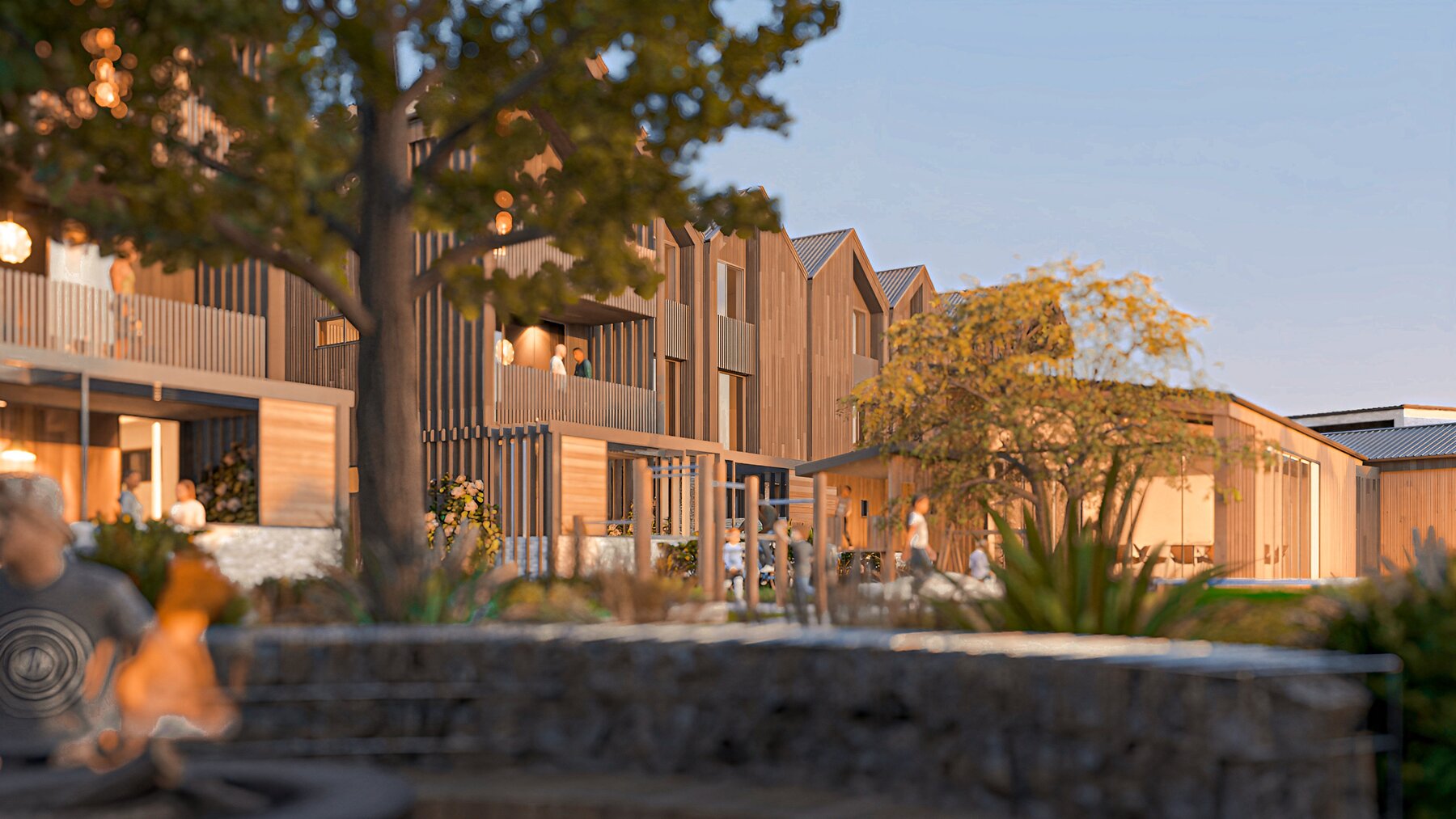
Shared amenities: community house, lounge and dining space, laundry, children's play area, edible gardens, workshop spaces, an orchard, a wellness space with sauna, and resilient electrical infrastructure shared across the development.

Certified Passive House throughout — up to 90% less heating energy than an existing conventional NZ home, and over 75% less than a typical new-build. A centralised air source heat pump system produces domestic hot water across the development — using around 60–75% less electricity than conventional electric hot water systems. Solar power and battery storage. A Hydraloop greywater reuse system, piloted in partnership with Hamilton City Council.

Resource Consent issued April 2026. Ground broken May 2026. Vertical build August 2026. Stage 1 complete February 2027. Stage 2 by Q3 2027. Stage 3 by Q3 2028.

Background

Project background

Cohousing isn't new. Scandinavia and Europe have been doing it since the 1960s, and there are existing projects across Aotearoa: Earth Song in West Auckland, the Quaker community in Whanganui, Peterborough Cooperative in Christchurch, Cohaus, Takaka Cohousing, Toi Ora in Dunedin.

I came to this work through earlier exposure — Nightingale Housing in Melbourne, while I was at HIP V. HYPE — and through more direct involvement: in the early days of Takaka Cohousing, and in the early days of The Housing Innovation Society. Peachgrove East draws on what I learned from those projects, and from the practitioners who have been doing this work for longer than I have.

I co-founded Living Systems Development with Rick Fourie and have had primary responsibility for design, consenting, procurement and project setup, alongside heavy involvement in marketing, financing and community formation.

Growing up in Northern Ireland made me pay attention to how the design of places shapes the communities living in them – most often in negative ways. Peachgrove East is the largest project I've worked on that tries to do that differently.

Design

Site design

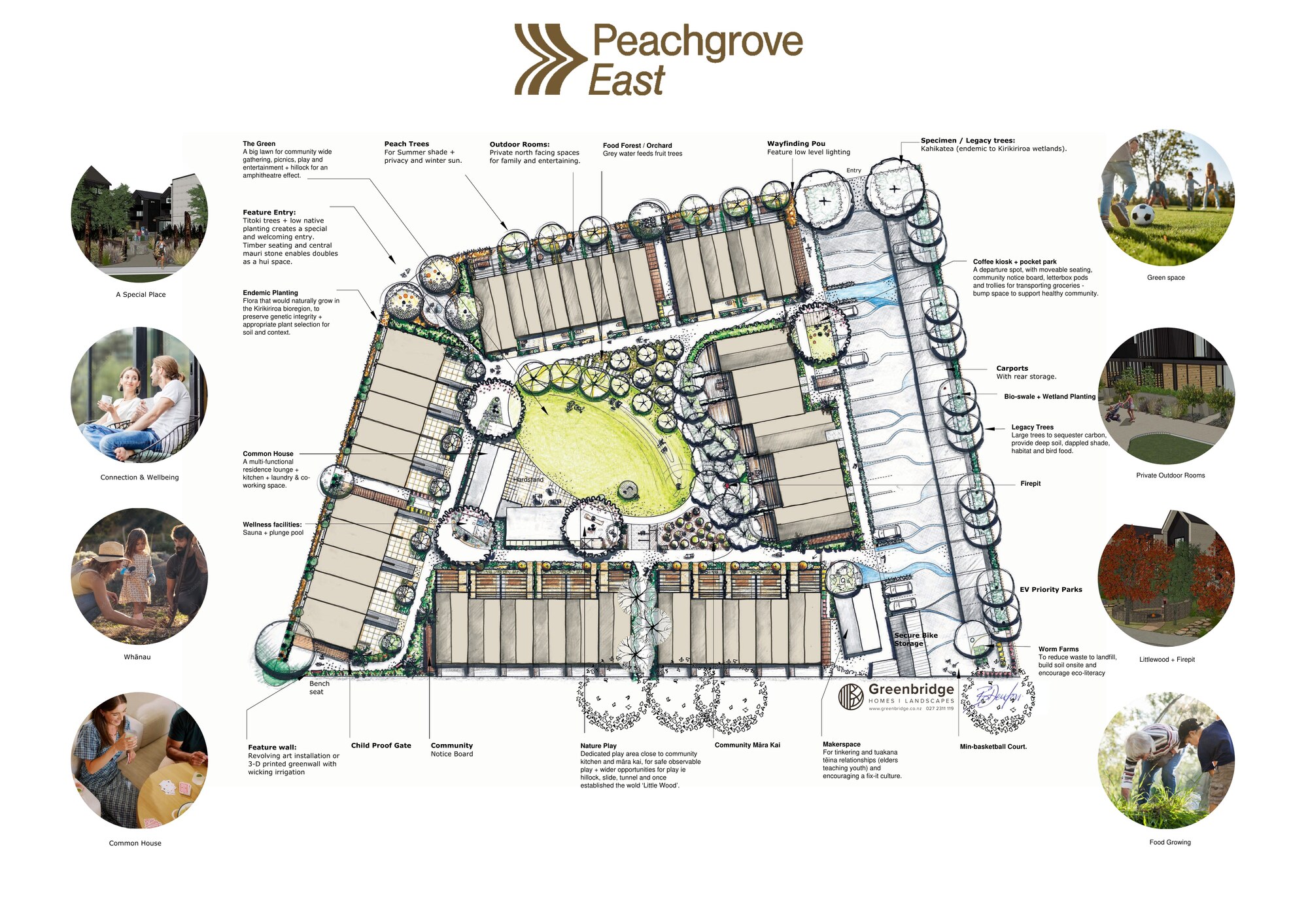
The site plan, developed with Greenbridge Homes + Landscapes, sets out the homes alongside the shared amenities: a common house, food growing, planting endemic to the Kirikiriroa bioregion, a wellness facility, and play areas.

Annotated site plan of Peachgrove East showing buildings, common house, gardens, and shared amenities

Peachgrove will give people a tangible example that the standard of housing and community development we see around us is not an inevitable outcome — and it can be different. The changes we want to see are not ones we can facilitate on our own. They require policy change, the private sector, developers and builders to come together to make different decisions and value different things.

— Ben Preston, Living Systems Development

Delivery

What this project has navigated.

Procurement architecture

A multi-contractor build with first-of-kind systems — NZS 3910/3916 contracts across civils, superstructure, and energy network, alongside nominated procurement for certified Passive House windows, MHRV systems, hot water, and the Hydraloop greywater network.
Governance

Elinor Ostrom's Nobel Prize-winning work on collective resource management, and the cohousing projects that have applied it before us, gave a solid foundation. What we worked through was the specific New Zealand legal and operational context: a Residents Society Constitution, operational manual, covenant on title, and right of first refusal structure. Designed so residents can choose the degree of their involvement — from a shared meal once a month to being in the garden every day — without the community depending on any one level of participation to function.

Multiple ownership pathways

Standard purchase, shared equity, and rent-to-own pathways operating simultaneously — each with its own legal and financial structuring, within a single community formation process.

Financing without subsidy

Net-zero Passive House at this scale, without government support, required a financing structure that could carry the cost premium of certified performance while remaining viable for a small developer and reasonably priced for buyers.

Integrated infrastructure

A shared customer energy network across the development — solar PV, battery storage, and centralised heat pump hot water — designed to operate as a single resilient system rather than 48 separate ones. A Hydraloop greywater reuse network piloted in partnership with Hamilton City Council. Productive landscaping with an orchard and edible gardens worked into the site plan as part of the shared amenity, not as ornament. Each of these is unusual at this scale in New Zealand. Together, they demonstrate what becomes possible when infrastructure starts by minimising demand-side resource use, then integrates thoughtfully with centralised supply.

Launch event

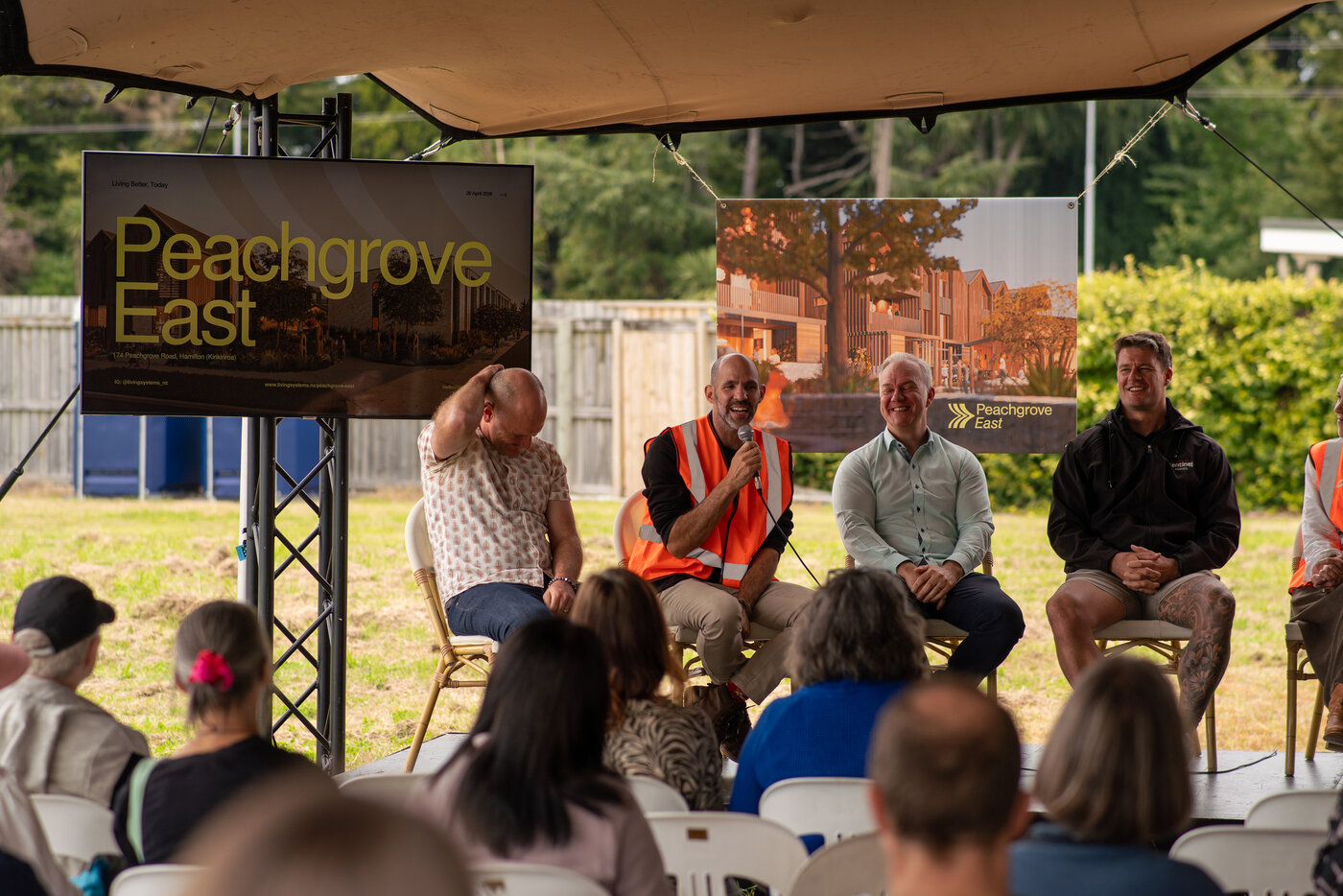
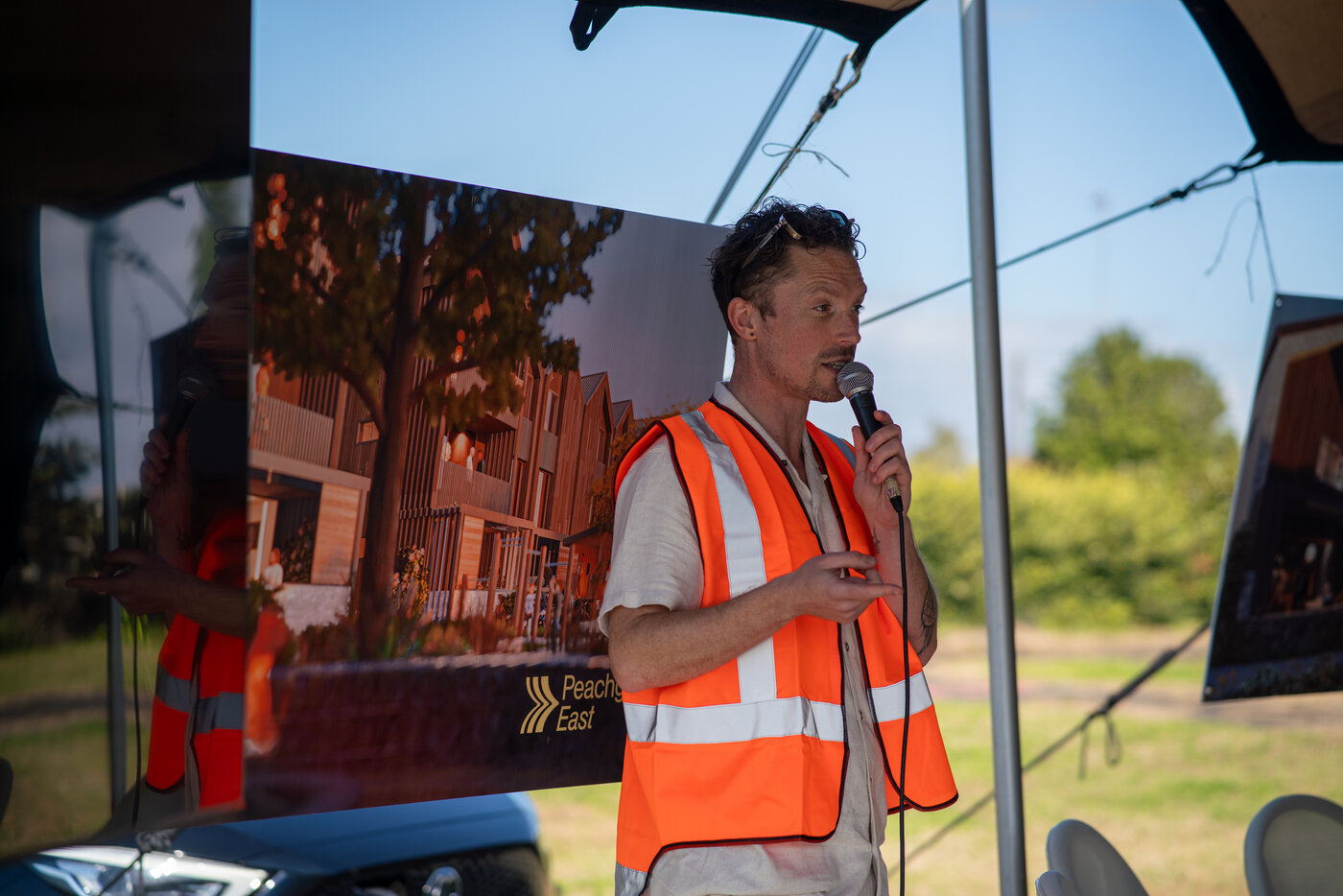
Project launch, April 2026.

On Sunday 26 April, we were formally welcomed onto the whenua by Ngāti Wairere with a powhiri and karanga, alongside future residents, members of the public, councillors, and the project team. Ngāti Wairere led a blessing of the land, marking the start of formal site works ahead of earthworks commencing in May.

The afternoon included a panel discussion with the project team and key partners, covering the design approach, the governance structure, and the working relationships that have made the project possible. A genuinely meaningful day — and a real marker of the relationships this project is being built on.

Working with

Project team

Developer
Living Systems Development
Architecture
Smith Architects (Phil Smith and Akash)
Landscape and site planning
Greenbridge Homes + Landscapes
Passive House design
Guy Shaw, Energy Architecture
Head contractor
Sentinel Homes Waikato
Planning
Feathers Planning
Civil engineering
Titus Consulting Engineers
Surveying
Blue Wallace

Beyond the team

Working partnerships

Hamilton City Council

Formal partnership on the Hydraloop greywater pilot, exploring how demand-side resource use can be a shared concern between developers and Council as infrastructure capacity tightens and rates increase.

Ngāti Wairere

Mana whenua of the project site. Our relationship with Ngāti Wairere continues to develop, with a shared focus on the mauri of the whenua and Ngāti Wairere's aspirations for it.

If any of this is relevant to what you're working on,
let's chat.

Coverage: Architecture Now · Waikato Times